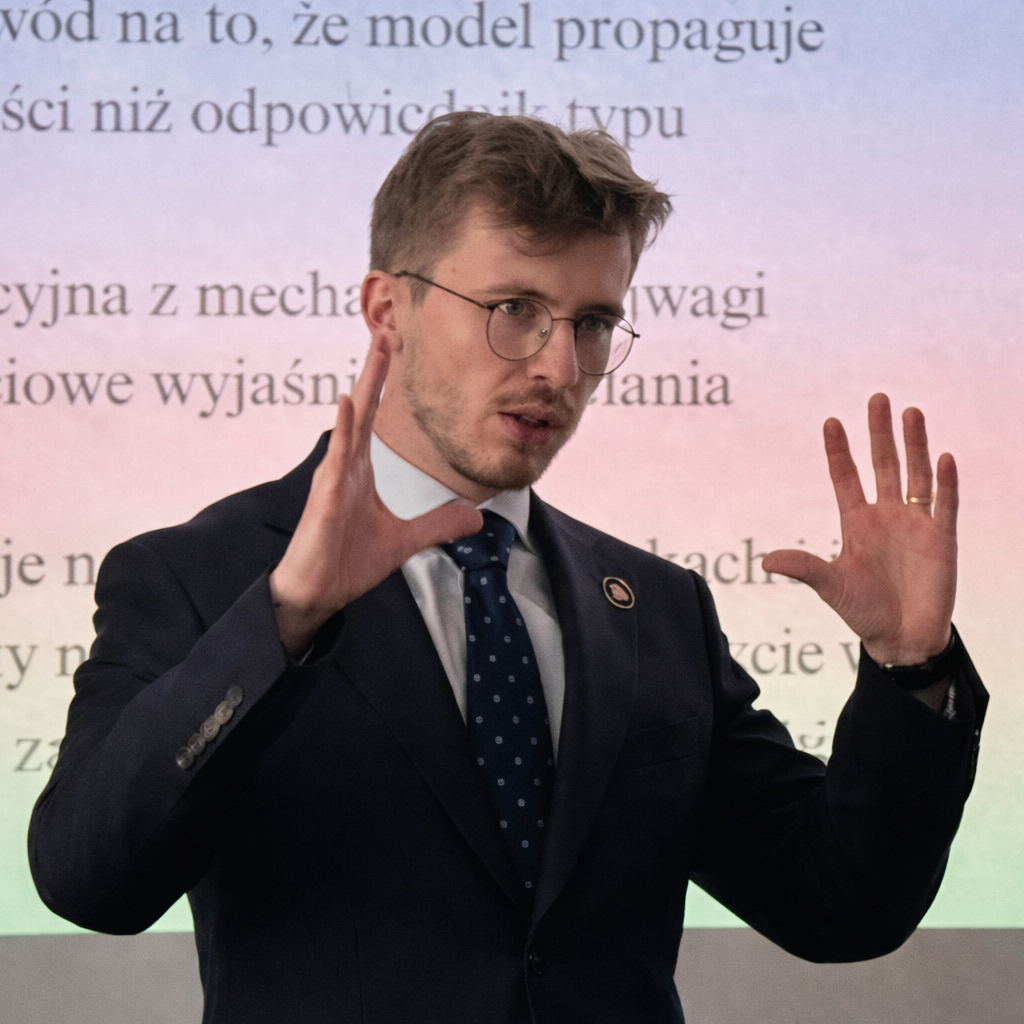
Dr. Hubert Plisiecki
IDEAS Research Institute & Polish Academy of Sciences
Hubert Plisiecki is an AI researcher at the IDEAS Research Institute and a computational social scientist with a PhD in psychology (Polish Academy of Sciences), working at the intersection of psychology, machine learning, and natural language processing. His work develops interpretable, theory-informed computational approaches that use language as a window into mental life, with a particular emphasis on moving beyond black-box prediction toward explanations that remain meaningful for psychological science and clinical research. He is especially interested in how modern AI systems can support the study of mind and behavior while remaining sensitive to issues of bias, validity, and scientific rigor. Alongside his academic work, he collaborates across disciplines and co-leads initiatives promoting open and reliable science at the Polish Society for Open Science.
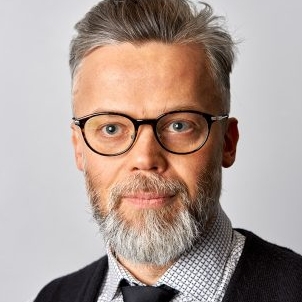
Dr.n.med. Artur Wiśniewski
Institute of Psychiatry and Neurology, Warsaw
Dr. Artur Wiśniewski is a graduate of the Medical University of Warsaw. He completed his specialization in psychiatry at the First Psychiatric Clinic of the Institute of Psychiatry and Neurology, and his specialization in child and adolescent psychiatry at the Clinic of Developmental Psychiatry in Warsaw. He completed his postgraduate training in cognitive behavioral therapy under the supervision of Prof. Marek Reinecke at the CBT Center. Since 2000, he has maintained an active clinical practice, initially at the First Psychiatric Clinic of the Institute of Psychiatry and Neurology, and subsequently at the Clinic of Developmental Psychiatry in Warsaw.
Dr. Wiśniewski holds a certificate as a cognitive behavioral therapist and supervisor-educator of the Polish Society of Cognitive and Behavioral Therapy (PTTPB), where he also serves as a member of the Ethics Committee. He conducts specialist training in CBT, with a focus on case conceptualization, cognitive and behavioral techniques, externalizing disorders, ADHD, ASD, and cognitive behavioral therapy for schizophrenia. His professional output includes numerous scientific publications and conference presentations.
He is a recipient of several prestigious international fellowships and scholarships, including the COST Training School (Athens), the ECNP School on Child and Adolescent Neuropsychopharmacology (Venice), the Donald J. Cohen Fellowship Award (Budapest), the ECNP School on Neuropsychopharmacology (Oxford), and the ICACAP Study Group (Lithuania).
His current research interests include the application of Relational Frame Theory to the analysis of artificial intelligence systems and their potential use in clinical practice. He is currently involved in developing standards for the use of AI in psychotherapy on behalf of the PTTPB.
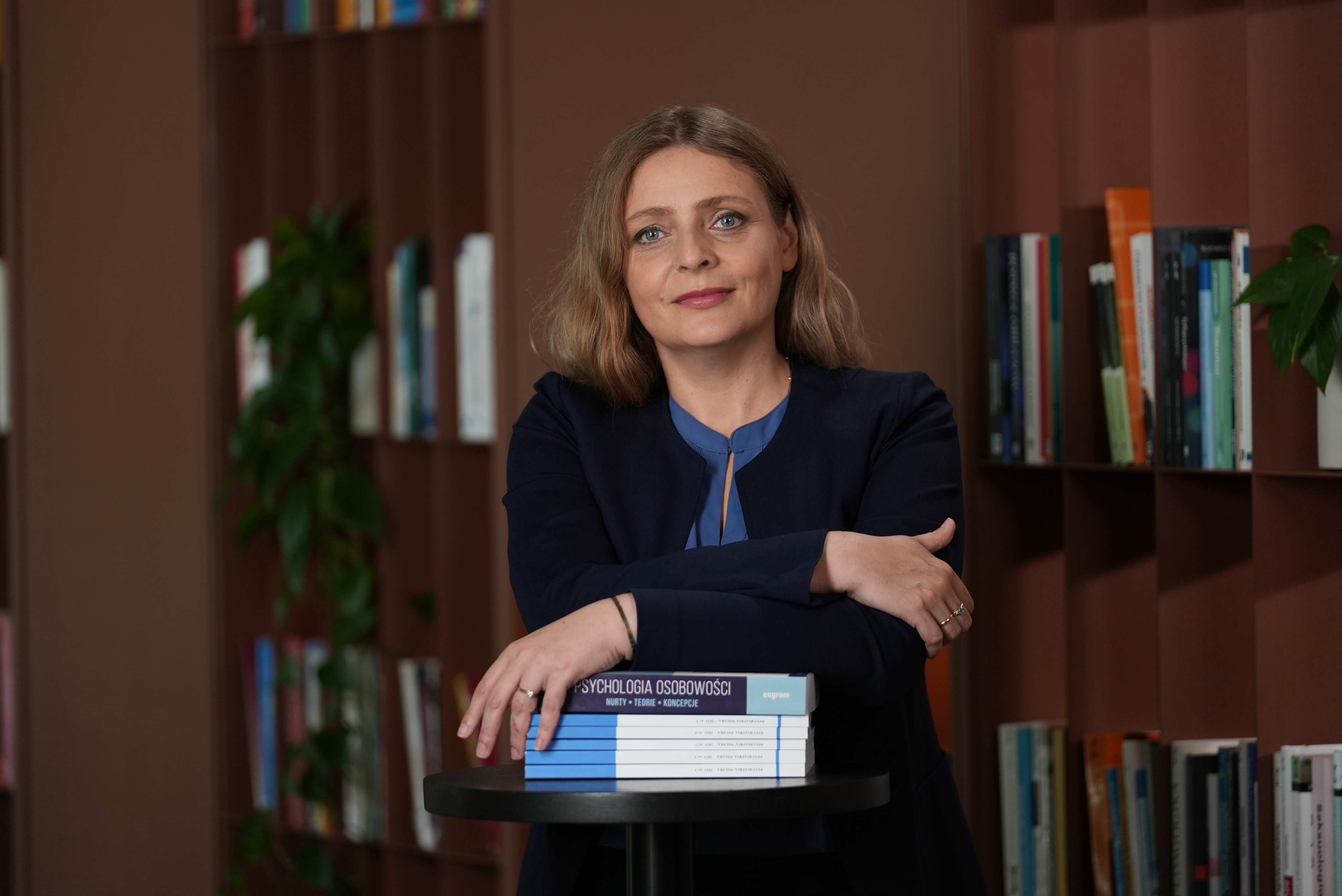
Dr. Beata Rajba
Collegium Witelona State University
Beata Rajba, PhD, is a psychologist and philologist, and a lecturer at Collegium Witelona State University. Her research focuses primarily on the functioning of adolescents and young adults, particularly in the context of digital environments and emerging technologies. She has provided expert support in an experiment conducted by Wojtek Popiela, in which he impersonated a chatbot "patient," and has studied the phenomenon of deepfake cyberbullying among teenagers, as well as the use of chatbots as a form of psychological support among university students.
In her talk, "Be My Psychologist and Friend! What Psychological Mechanisms and Linguistic Strategies Make Us Build a Pseudo-Therapeutic Relationship with AI - and How Does It Differ from Working with a Human?", she explores why so many young people turn to AI for emotional support. Drawing on classic experiments such as ELIZA (1966) and contemporary data on student AI use, she examines the psychological mechanisms that lead us to anthropomorphize chatbots and form one-sided attachments, including theory of mind, hyperactive agency detection, projection, and object relations theory.
She also analyzes the linguistic strategies that foster relational closeness, discusses the limitations and errors AI systems make in therapeutic contexts, and reflects on the safeguards introduced in response to cases where AI-assisted interactions have ended harmfully. Her work offers a nuanced perspective on when AI-based psychological support may be helpful and when human contact remains irreplaceable.
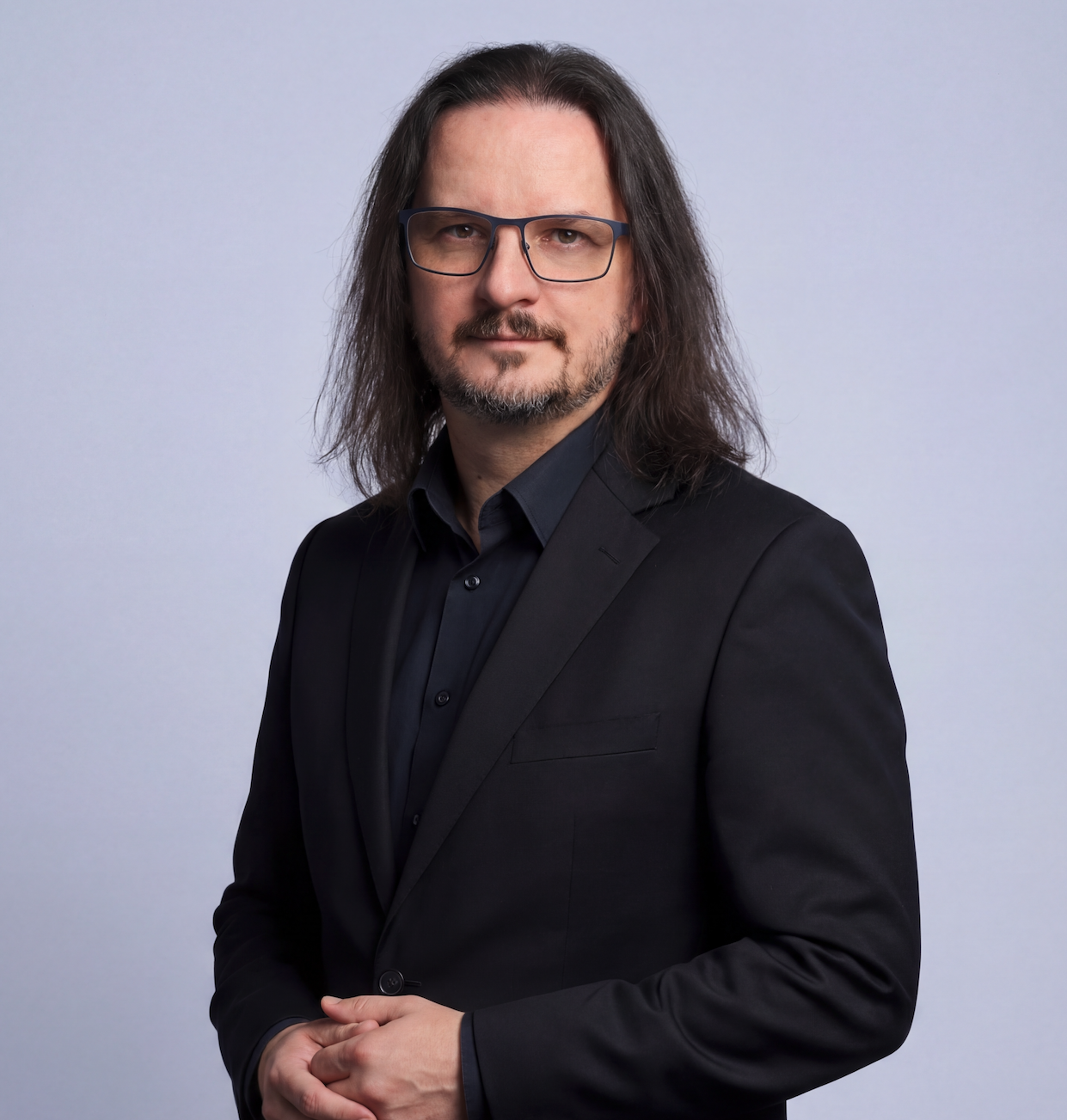
Dr. Paweł Szczęsny
University of Warsaw & Polish Academy of Sciences
Paweł Szczęsny is a psychologist and biologist with a PhD in bioinformatics, and the founder of IMPERSONATO, a private AI research lab focused on the psychology of AI systems. His work sits at the intersection of cognitive science, human-AI interaction, and AI safety evaluation, with a focus on how AI-mediated environments influence judgment, trust, and decision-making.
With 25 years of experience spanning academia (UCSD, Max-Planck Institute, University of Warsaw, Polish Academy of Sciences), pharma R&D (Roche), and AI/biotech ventures, Dr. Szczęsny brings a uniquely multidisciplinary perspective. He has authored around 50 peer-reviewed publications, contributed to EU and UNESCO science policy initiatives, delivered two TEDx talks, and received the Polityka Scientific Award.
At our conference, Dr. Szczęsny will present "Failure Modes in AI-Mediated Psychological Support." As AI chatbots increasingly step into therapy-adjacent roles, his research asks a critical question: are the risks we see surprising bugs, or predictable consequences of how these models are built? Through systematic testing of multiple state-of-the-art models, he identified five recurring failure modes, from blind trust in what users say to rigid default interaction patterns that undermine therapeutic fit. His talk will translate these findings into practical safety guidance for the future of AI in mental health support.
If you want to hear Dr. Szczęsny's insights on where AI-based psychological support fails and what we can do about it, we invite you to join us during the conference.